
 Product News
Vacuum brazing of tungsten carbide and stainless steel
Normantherm•6/12/2026
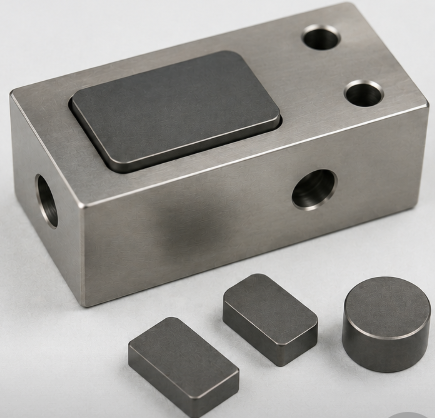
Vacuum brazing of tungsten carbide and stainless steel is a highly effective joining process used in the manufacture of wear-resistant tools, cutting components, semiconductor parts, molds, dies, and precision industrial equipment. This technology combines the exceptional hardness and abrasion resistance of tungsten carbide with the corrosion resistance and toughness of stainless steel, producing components with outstanding performance and durability.
During the vacuum brazing process, the tungsten carbide and stainless steel components are assembled with a suitable nickel-based or silver-based brazing alloy and placed inside a high-vacuum furnace. The furnace heats the assembly to the brazing temperature, typically between 950°C and 1150°C, allowing the filler metal to melt and flow into the joint by capillary action. The vacuum atmosphere prevents oxidation and contamination, ensuring a clean, strong, and reliable metallurgical bond.
The vacuum-brazed joint provides excellent mechanical strength, wear resistance, corrosion resistance, and dimensional accuracy. Compared with conventional welding methods, vacuum brazing produces minimal distortion, superior surface quality, and consistent joint performance, making it ideal for high-precision applications.
Type of Furnace Used
Tungsten carbide and stainless steel components are typically brazed in a high-vacuum brazing furnace equipped with a graphite or molybdenum hot zone. These furnaces operate at vacuum levels ranging from 10⁻³ to 10⁻⁵ mbar and provide precise temperature control and uniform heating throughout the load. The controlled vacuum environment ensures oxidation-free brazing, resulting in high-quality joints and superior product reliability.
You may also like
Product News Product News
 Product News