
 Industry News
Vacuum Brazing of Ceramics to Metal: Process & Applications
Normantherm•8/13/2026
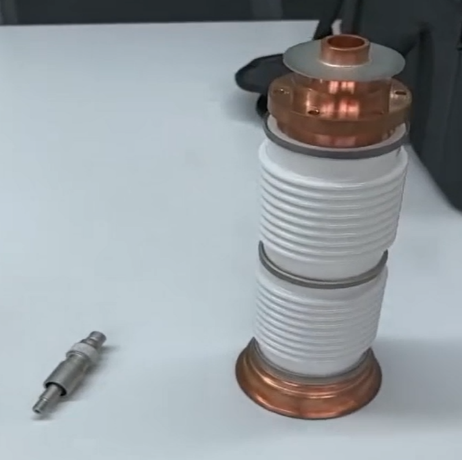
Vacuum brazing is an advanced joining technology used to create strong, reliable joints between ceramics and metals. Since ceramics and metals have different thermal expansion properties, careful control of the brazing temperature and filler material is essential. The process is performed in a high-vacuum furnace, preventing oxidation and contamination while producing clean and high-quality joints.
Process:
The typical process includes surface cleaning and preparation, component alignment, application of suitable brazing filler metal, controlled heating in a vacuum furnace, brazing at the required temperature, and controlled cooling. Special active brazing alloys may be used to improve bonding between the ceramic and metal surfaces. Precise temperature control helps reduce thermal stress and prevents cracking or deformation.
Application Industries:
Ceramic-to-metal vacuum brazing is widely used in semiconductor and electronics, aerospace, medical equipment, automotive, electrical power, high-temperature equipment, sensors, and defense industries. Typical applications include ceramic-to-metal feedthroughs, electrical insulators, sensor assemblies, semiconductor components, vacuum components, heat-resistant assemblies, and electronic packages. With excellent cleanliness, precise dimensional control, strong bonding, and reliable performance, vacuum brazing provides an effective solution for demanding ceramic-to-metal joining applications.
You may also like
Industry News Industry News
 Industry News