
 Product News
Stainless Steel and Tungsten Carbide Welded Finished Products for High-Performance Tooling
Normantherm•8/10/2026
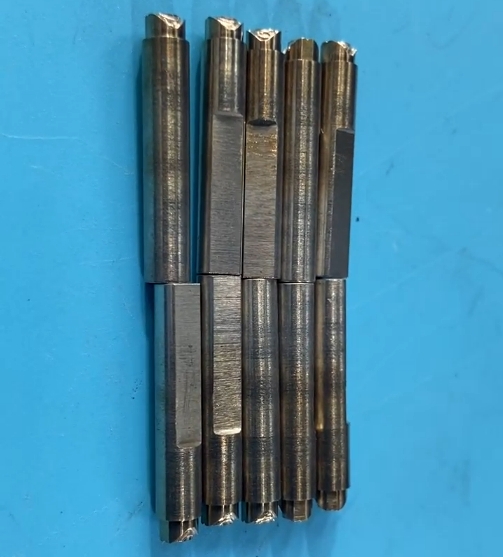
Modern industrial tooling requires materials that can withstand continuous mechanical loads, abrasion, impact, and demanding operating conditions. Combining stainless steel and tungsten carbide is an effective way to achieve these performance requirements. Stainless steel provides structural strength, toughness, and corrosion resistance, while tungsten carbide offers exceptional hardness and wear resistance.
However, joining these two dissimilar materials requires precise thermal processing. Vacuum brazing of stainless steel and tungsten carbide provides a reliable method for producing strong, clean, and durable finished products for tooling, machinery, and precision manufacturing applications.
Why Combine Stainless Steel and Tungsten Carbide?
Stainless steel is widely used as a structural material because of its excellent corrosion resistance, toughness, machinability, and mechanical strength. It provides a reliable foundation for components that operate in harsh industrial environments.
Tungsten carbide, also known as cemented carbide, is valued for its extremely high hardness and resistance to abrasion. It is commonly used on cutting edges, wear surfaces, inserts, and other areas exposed to severe mechanical wear.
Combining these materials allows manufacturers to place tungsten carbide exactly where high wear resistance is required while using stainless steel for the supporting structure. This material combination can improve component durability while maintaining practical manufacturing costs.
Challenges in Welding Tungsten Carbide to Stainless Steel
Direct welding of tungsten carbide to stainless steel can be challenging because the two materials have substantially different thermal and mechanical properties. Their different coefficients of thermal expansion can generate stress at the joint during heating and cooling.
Excessive heat can also affect the carbide or cause unwanted distortion in the stainless steel component. Oxidation and surface contamination can further reduce joint quality.
For these reasons, conventional welding is not always suitable for precision carbide-to-stainless-steel assemblies. Vacuum brazing provides a more controlled alternative.
Vacuum Brazing of Stainless Steel and Tungsten Carbide
During vacuum brazing, the stainless steel and tungsten carbide components are positioned accurately before being heated inside a controlled vacuum furnace. The reduced-pressure environment minimizes oxidation and contamination throughout the brazing cycle.
As the temperature reaches the required brazing range, the filler metal melts and flows between the prepared surfaces. Proper control of the heating rate, brazing temperature, holding time, and cooling process helps produce a uniform joint while minimizing thermal stress.
This controlled process is particularly important when manufacturing precision components where joint strength, dimensional accuracy, and repeatability are critical.
Advantages of Vacuum-Brazed Stainless Steel and Tungsten Carbide Products
Vacuum brazing offers several advantages for stainless steel and tungsten carbide assemblies. The process creates clean joints without the surface oxidation commonly associated with atmospheric heating. Precise furnace temperature control also improves repeatability from batch to batch.
The resulting finished products can provide excellent wear resistance at the working surface while retaining the structural toughness and corrosion resistance of the stainless steel base. This makes the technology suitable for components exposed to abrasive materials, repeated mechanical loads, and demanding production environments.
Applications of Stainless Steel and Tungsten Carbide Finished Products
Vacuum-brazed stainless steel and tungsten carbide components are used in a wide range of industrial applications. Tooling manufacturers use them for wear-resistant inserts, cutting components, forming tools, and precision machine parts.
The same joining technology can also be applied to components used in mold manufacturing, mining equipment, industrial automation, food processing machinery, medical equipment, and specialized engineering systems.
The exact combination of stainless steel grade, tungsten carbide grade, filler material, joint design, and brazing cycle depends on the application's mechanical, thermal, and corrosion requirements.
Normantherm Vacuum Brazing Technology
At Normantherm, we manufacture advanced vacuum brazing furnaces for joining tungsten carbide with stainless steel and other engineering materials. Our systems are designed to provide a stable vacuum environment, precise temperature control, and uniform heating throughout the working chamber.
These capabilities are essential for producing reliable tungsten carbide and stainless steel brazed components, particularly where joint consistency and dimensional accuracy are important.
Normantherm vacuum furnaces can also support brazing and thermal processing applications involving copper, titanium alloys, tool steels, ceramics, diamond materials, and other advanced engineering materials.
Conclusion
Stainless steel and tungsten carbide welded finished products combine the structural strength and corrosion resistance of stainless steel with the exceptional hardness and wear resistance of tungsten carbide. Vacuum brazing provides a controlled joining process that helps manufacturers achieve clean, strong, and consistent joints between these dissimilar materials.
For tooling, mold manufacturing, industrial machinery, and precision engineering, vacuum-brazed stainless steel and tungsten carbide assemblies offer a practical solution for improving wear resistance and component service life. With advanced furnace technology and precision thermal processing expertise, Normantherm provides vacuum brazing solutions for demanding industrial manufacturing applications.
You may also like
Product News Product News
 Product News